
Bridgewater State University's "AI in Action: Building a Human-Centered Future," third annual AI Summit was held on Wednesday, April 1, 2026. Thank you to all participants for creating this educational and engaging event.
Featured Speakers
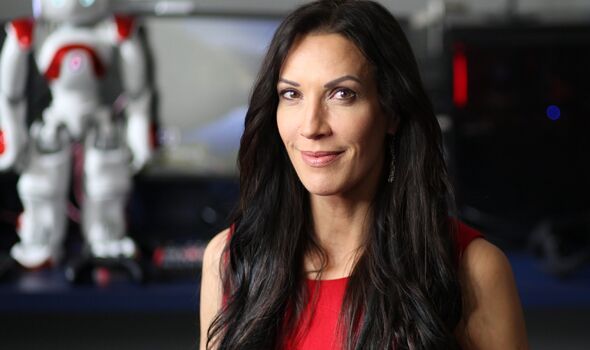
Dr. Helen Crompton, Keynote
Generative AI in Higher Education. Capabilities, Concerns, and Practice
The rapid emergence of generative AI has prompted both interest and concern across higher education. This keynote situates generative AI within the broader context of higher education, drawing on recent developments and research to describe where the field currently stands. It then addresses documented limitations, risks, and instances of misuse before turning to research-informed ways in which GenAI can be used in higher education to support teaching and learning.
About Dr. Crompton
Dr. Helen Crompton is the Executive Director of the Research Institute for Digital Innovation in Learning at ODUGlobal, Professor of Instructional Technology, and Director of the Virtual Reality Lab at Old Dominion University. Dr. Crompton earned her Ph.D. in educational technology and mathematics education from the University of North Carolina at Chapel Hill. Recognized for her outstanding contributions, Dr. Crompton has achieved a place on Stanford's esteemed list of the top 2% of scientists worldwide. Her exceptional work in technology integration has garnered her numerous accolades, including the SCHEV award for the Outstanding Professor of Virginia. Dr. Crompton's expertise extends beyond academia, as she frequently serves as a consultant for various governments, bilateral and multilateral organizations such as the United Nations and the World Bank, leveraging her knowledge and experience to drive meaningful change in the field of educational technology.

Dr. Tiera Tanksley, Virtual Keynote
Teaching to Transgress …the Algorithm: Fostering Algorithmic Agency and Sociotechnical Consciousness in the Age of AI
Since the high-profile release of ChatGPT in 2022, the desire to leverage the power of AI to transform teaching and learning has hit a fever pitch. Believed by many as the “silver bullet” that will bring an end to educational inequality, AI technologies continue to proliferate within college classrooms and across campuses, promising to bolster academic achievement, spark student engagement and ensure campus safety all while lessening the workload of overworked and systemically underpaid faculty and staff. However, as research is beginning to show that many of the AI technologies being used in and designed for institutions of learning are rife with algorithmic biases that threaten to exacerbate - rather than remediate - educational inequity for historically marginalized students.
In this keynote, I will discuss the challenges, critiques, and calls to action that currently permeate the field of education concerning AI, and highlight how an explicit focus on justice and educational equity within the design, procurement, use and teaching of AI technologies can produce transformative changes for teaching and learning. I simultaneously center the experiences, perspectives and sociotechnical innovations of Black youth that participate in the Race, Abolition and Artificial Intelligence program, and in doing so showcase how we can collectively reimagine, rebuild and even refuse anti-Black AI systems within education.
About Dr. Tanksley
Dr. Tiera Tanksley's scholarship theorizes a critical race technology theory (CRTT) in education, extends conventional education research to include socio-technical and techno-structural analyses of artificially intelligent (AI) technologies. Dr. Tanksley's research examines anti-Blackness as “the default setting” of AI and examines the socio-emotional, mental health and educational consequences of algorithmic racism in the lives and schooling experiences of Black youth. Her work simultaneously recognizes Black youth as digital activists and civic agitators, and examines the complex ways they subvert, resist and rewrite racially biased technologies to produce more just and joyous digital experiences for Communities of Color across the diaspora.