

We’re trying to make the hidden curriculum of career development visible.
“What do you want to be when you grow up?”
It’s a question that stumps many, especially college students who are usually still trying to figure it all out.
To help solve this riddle, Bridgewater State University Career Services and Internships is launching a new framework that helps students explore the possibilities.
“We’re trying to make the hidden curriculum of career development visible,” said Executive Director of Career Services and Internships Dr. Gerald Tang.
While many students understand how to earn a college degree, they don’t always know about the “unwritten steps” that can lead to a meaningful career.
According to Tang, the framework focuses on three areas: education, skill building, and experience.
Rather than asking students, “what major are you choosing,” Career Services is encouraging them to think more broadly: What interests them? What skills do they want to develop? What experiences will help them grow?
“We want to shift away from the idea that a major equals a career. A major is just one piece of the puzzle,” Tang said. “We want students to think more broadly about their interests, goals, and values, and how those align with industries, companies, and roles, not just a major.”
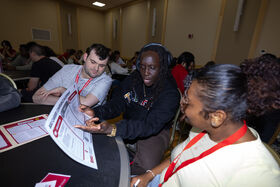
The goal is to inspire students right out of the gate, which is the reason this new framework is being presented to them as early as orientation.
“This is streamlining what we’ve already been doing in a way that is easily digestible and understandable. It offers a clearer way for students to break it up into smaller steps, to build career confidence,” said Katie Vagen, associate director of Internships and Career Development.
Career Services has found that many students assume they will figure out their career path after graduation, once they have their degree in hand.
“They focus only on earning a degree and miss out on opportunities to build experience along the way,” Vagen said.
That is why students should recognize that career-building experiences aren’t limited to just academics or internships. Working at a campus job, joining a student organization, volunteering, conducting undergraduate research, studying abroad or taking on a leadership role can all help students better understand their strengths and interests, Vagen said.
These experiences can also help students expand their skills such as communication, teamwork, leadership, problem solving, and adaptability. All are important when it comes time to enter the workforce.
“We want students to start somewhere but explore everywhere. Every class, experience, and opportunity helps them learn more about themselves and where they want to go,” Vagen said. “You don’t have to have it all figured out. You just have to take one small step. Every experience helps students build the confidence to design their own career journey,”
Do you have a BSU story you'd like to share? Email stories@bridgew.edu