This is a content holder for the one-button emergency notification system.

Free tuition and mandatory fees for families earning $125,000 or less. Learn about the Bridgewater Commitment »

Sustainability at BSU

Bridgewater sees sustainability as a responsibility to our students, our region and our planet.

At Bridgewater State University, we recognize that institutions of higher education have both the responsibility and the opportunity to lead by example. As BSU is uniquely positioned to prepare the next generation of leaders to address the pressing environmental and social changes of our time, we have aligned our efforts with the United Nations Sustainable Development Goals (SDGs) and the Sustainability Tracking, Assessment, and Rating Systems (STARS) framework developed by the Association for the Advancement of Sustainability in Higher Education (AASHE). These tools guide our work, inform our metrics, and support transparency and accountability in our progress.

This website reflects a sampling of the work BSU has undertaken, led by BSU’s standing committee on Sustainability Innovations Strategy. The projects are collaborations between students, faculty, staff, and administrators and reflect institutional strategic goals including student success, diversity, equity, inclusion and social justice, service to the region, employee wellness and the teaching and learning environment.

Learn more about how those values come to life in our classrooms, labs, residence halls and beyond.

Our Values in Action

2.07M

sq. ft. of sustainably stewarded building space

2+ MW

of on-campus solar generation

79

sustainability-related courses

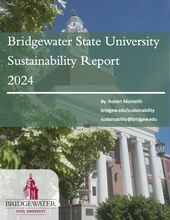
Cover of Bridgewater State University Sustainability Report 2024

2024 Sustainability Report

BSU’s Sustainability Report provides an annual overview of progress across academics, engagement, operations, and planning. The report documents performance metrics, highlights key initiatives, and supports transparency through alignment with STARS reporting and other regulatory and benchmarking frameworks.

Read the 2024 Sustainability Report »

Accordion Content

Academics

Learning by Doing: Sustainability in the Classroom and Lab

At Bridgewater State University, we have always subscribed to the learn by doing methodology, and sustainability is no exception to that. Our combination of course offerings and research provide insights into how to best address current climate and sustainability issues.

Students are able to choose between a selection of 68 undergraduate and 11 graduate courses related to sustainability. This knowledge is then applied in class projects and research such as the work in the Adrian Tinsley Program (ATP) where undergraduates get to perform real research with a faculty mentor. By integrating sustainability throughout its academic programs, BSU seeks to create graduates who leave campus with an understanding of, and the abilities to develop sustainable solutions to, the world’s problems.


Curriculum


Teaching Resources


Research

  • A close up of a purple pincushion flower in the dye garden at BSU

    Drs Ed & Terry Brush Green Chemistry Education Lab

  • Dye Garden, where dye plants grow in the campus garden to be used in textile and art projects.
  • Interdisciplinary Sustainability Research (ISR) Grants, offered by the Sustainability Program, support faculty- and librarian-led student projects. These grants promote collaborative, interdisciplinary research that reflects the program’s mission to engage the BSU community and regional partners in advancing sustainable practices. Funded projects contribute to integrating sustainability into learning, teaching, research, and everyday life.
  • Onsite Upcycling of plastic bottles for shredding, extruding and reusing in the Maker Space/Think Tank with Chemistry.
  • Permaculture Garden

Engagement

Leading Change on Campus and Beyond

grad

Sustainability engagement at BSU connects academic learning, campus life, and public partnership. Students, faculty, staff, and community collaborators participate in initiatives that promote environmental stewardship, social responsibility, and applied problem‑solving.

Engagement efforts include student‑led organizations, campus‑wide programming such as STEM Week, educational outreach, and public forums that support regulatory transparency, regional collaboration, and shared learning.


Campus Engagement

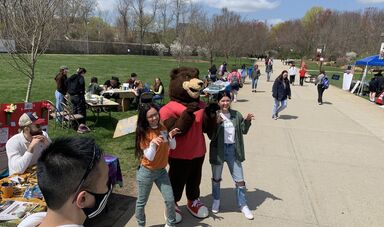
Students posing with BRISTACO at the Earth Day Fair
  • Student Organizations, including Environmental Action Team, Global Brigades BSU, Biology Club, Women in STEM, Inclusive Advancement of Multicultural Students in STEM, Chemistry Club
  • STEM Week, an annual campus event
  • Educational Signage on trash receptacles in Rondileau Student Union to raise awareness about recycling
  • Move Out Recycling and Food Pantry Donation Program in association with Residence Life and Housing, FM & Food Pantry


Public Engagement

BSU engages the broader community through public meetings, educational programming, regional partnerships, and sustainability reporting. Public engagement supports transparency, shared learning, and collaboration on environmental and infrastructure‑related initiatives.

  • 2024 Sustainability Report
  • MS4 Permit Annual Public Meeting, held on Dec. 3 at 11 a.m.
  • Student Energy Ambassador Program
  • West Parking Lot, which features informational signage on green parking
  • Campus Empower Grant and related event with Greater New Bedford Energy Collaborative, Stonehill College, Massasoit Community College and BSU students

Operations

Greener Campus Operations

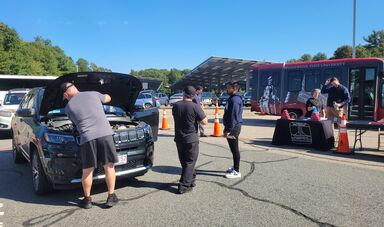
BSU volunteers inspecting a student's vehicle on Student Car Care Day

BSU advances sustainability through campus operations that prioritize energy efficiency, emissions reduction, responsible resource management, and regulatory compliance. Operational initiatives span buildings and grounds, transportation, fleet management, dining services, procurement, and waste reduction, and are informed by performance data, state mandates, and long‑term planning.

Investments in renewable energy, electric vehicle infrastructure, fleet modernization, and sustainable purchasing demonstrate BSU’s commitment to reducing environmental impact while maintaining safe, reliable, and resilient campus services.


Buildings & Grounds

BSU integrates sustainability into campus buildings and grounds through high‑performance design, renewable energy investments, and resource‑efficient infrastructure. Multiple academic, residential, and administrative buildings are LEED‑certified, and solar installations across campus support long‑term emissions reduction and energy resilience.

USGBC LEED Rated buildings

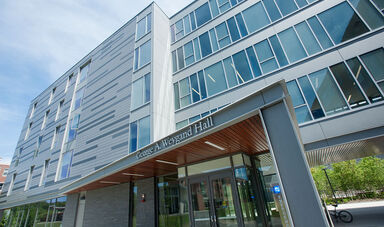
Weygand Hall
BuildingLEED Level
Crimson HallSilver
Pope HallSilver
Scott HallSilver
Dana Mohler-Faria Science and Mathematics Center (DMF)Silver
Weygand HallGold


Solar Energy

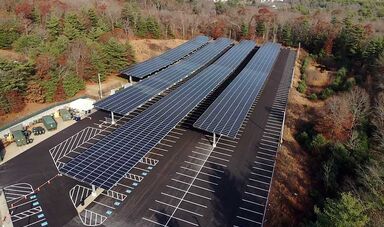
BSU has shifted close to 50% of its annual electrical usage to solar power through a combination of power purchase agreements and on‑site installations, substantially expanded its use of solar energy as a core component of its reporting and long‑term decarbonization strategy. BSU’s solar portfolio consists of multiple rooftop and parking‑canopy photovoltaic systems distributed across academic, residential, and operational facilities, representing more than 2 MW of installed on‑site solar generation capacity. These systems produce renewable electricity that directly offsets grid‑supplied power, reduces Scope 2 greenhouse gas emissions, and improves campus energy resilience.

Collectively, BSU’s solar installations—including major canopy systems and building‑mounted arrays provide a measurable contribution to institutional climate goals, support compliance with Massachusetts clean‑energy mandates, and demonstrate sustained progress toward a low‑carbon campus consistent with Executive Order-driven decarbonization efforts. 

An aerial view of the solar canopy at Tower Lot
LocationDC System SizeStatus
DMF (24 Park Ave.)137.7 kW8/1/22
Operations Building136.0 kW8/10/22
Miles/DiNardo Halls145.9 kW1/3/23
Weygand Hall110.2 kW1/3/23
Tower Lot Canopy1,2665.4 kWOperational 3/27/24
Swenson Lot Canopy371.52 kWPlanned/Operational


EV Charging Stations

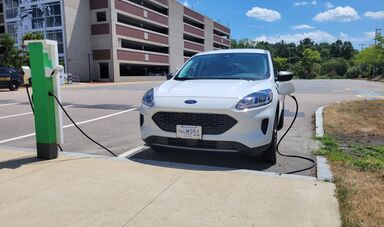
An EV charging station on east campus charging a BSU vehicle

Bridgewater State University operates 22 electric vehicle charging ports across campus, including public‑access and fleet‑designated stations, supporting low‑emission. Stations include 22 Level 2 electric vehicle charging ports across campus, including 6 fleet‑designated ports that directly support zero‑emission fleet deployment and 16 mixed‑use ports that support employee and community electric vehicle adoption, consistent with the requirements and intent of Massachusetts Executive Order 594. 

  • DMF: 4 stations, 8 plugs
  • Adrian Tinsley Center: 1 station, 2 plugs
  • Swenson Lot: 2 stations, 4 plugs
  • Weygand: 3 stations, 6 plugs  
  • Operations Center (Fleet): 4 stations, 8 plugs
  • Future station: Burnell: 2 stations, 4 plugs


Fleet & Grounds Equipment

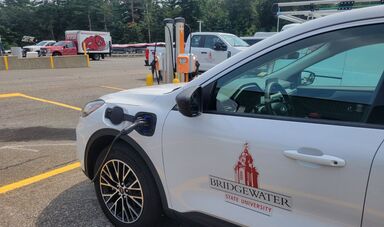
A BSU electric vehicle charging at the operations lot

BSU continues to modernize its fleet and grounds equipment to reduce emissions and improve efficiency. Investments include electric and hybrid vehicles, electric mowers, and low‑emission waste collection equipment that supports campus operations while reducing environmental impact.

  • Kenworth Rear Loading Refuse Collection Truck (aka BSU “Packer” truck), outfitted with selective catalytic reduction technology (SCR), creating near zero emissions. The Kenworth truck is equipped with a PACCAR engine. From 2013 to 2019 PACCAR has reduced greenhouse gas emissions 38%. Emissions requirements both for NOx and PM (particulate matter) are reduced by 90% from 2004 levels. In 2020, PACCAR achieved an A- score from CDP (Carbon Disclosure Project), placing in the top 15% of over 9,500 companies reporting and demonstrating a robust approach to reducing greenhouse gas emissions.          
  • 4 Electric Mowers: Grant funded, received in fall 2025
  • University Fleet conversion to hybrid and electric vehicles. BSU's goal is to transition 20% of its fleet to zero-emission vehicles (ZEVs) by 2030. BSU has met MA Executive Order 594 ZEV goals for 2025 and is on track for 2030.
    • 13 electric utility vehicles
    • 1 plug-in electric vehicle
    • 2 registered electric low-speed vehicles
    • 3 plug-in hybrid electric vehicles (PHEVs)
    • 1 police hybrid vehicle


Water & Waste Reduction Infrastructure

Water bottle refill stations and waste‑reduction infrastructure are installed throughout campus to reduce single‑use plastics and support sustainable daily practices. These systems are complemented by recycling, composting, and material diversion programs that engage students, staff, and visitors.

There are 50 water bottle refill stations across campus in the following locations:


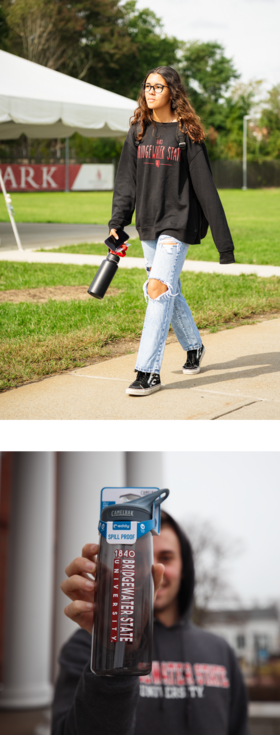
A student walking across campus, holding a water bottle; a student holds a BSU branded water bottle toward the camera
Building# of Units
Adrian Tinsley Center4
Art Building2
Bear Paw Pavilion1
Boyden Hall2
Clifford House0
DMF4
Graduate Studies1
Hart Hall5
Hunt Hall2
Kelly Gym3
Martin Richard Institute1
Maxwell Library2
Operations Center1
Rondileau Student Union2
Tillinghast Hall4
Welcome Center3
Residence Halls
Crimson Hall1
Great Hill Apartments1
Miles/DiNardo Halls2
Pope Hall1
Scott Hall1
Shea/Durgin Halls1
Stonehouse Hall1
Weygand Hall4
Woodward Hall1


Energy & Climate

Bridgewater State University tracks campus energy use and associated greenhouse gas emissions through integrated Energy Management and Building Automation Systems that combines real‑time operational controls with utility and performance data analytics. The system continuously monitors electricity, natural gas, water, and heating systems across academic, residential, and support facilities, capturing meter‑level and equipment‑level data used to evaluate building performance, manage peak demand, and inform operational decisions. Energy consumption data are correlated with weather conditions, occupancy patterns, and system operations to support emissions tracking dashboards, demand response participation, and long‑term climate planning. These performance metrics provide a consistent, verifiable basis for assessing energy efficiency, estimating emissions impacts, and measuring progress toward institutional sustainability and climate goals. 


Food & Dining

A dining services employee preparing food in the Bear's Den

Dining Services integrates sustainability through waste reduction, local and regional sourcing, and responsible procurement practices. Initiatives include food waste tracking, conversion of waste oil to biofuel, partnerships with local farms, and third‑party sustainability certification.

  • 23% ($918K) in regional spend (50-mile radius)
  • 7% ($300K) in local spend within state of Massachusetts
  • 13.3% ($360K) in diverse and small business spend
  • Level 1 Certified Green Restaurant by Green Restaurant Association (May 2025)
  • Harvest of the Month Program, partnering local farms with BSU; commitment to purchasing 1,570 pounds of food thru the harvest program for the 2025-2026 academic year


Procurement

Sustainable procurement practices guide purchasing decisions across the university, including recycled content materials, environmentally preferable cleaning products, and responsible electronics sourcing. These practices support lifecycle cost efficiency and reduce environmental impact.


Waste & Recycling

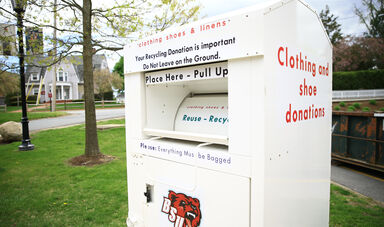
A textile collection bin on the BSU campus

BSU supports waste reduction and material diversion through campus‑wide recycling programs, specialized collection for batteries, bulbs, textiles, and Styrofoam, and student‑led recycling initiatives. Infrastructure and education work together to reduce landfill waste.


Transportation

Sustainable transportation options at BSU include public transit access, carpool parking, and regional commuter rail connections. These options support reduced single‑occupancy vehicle use while improving campus and regional mobility.


Commencement Regalia

Graduates running across the field at Gillette Stadium in their commencement regalia

BSU’s graduation regalia/caps & gowns, sourced from Oak Hall, are made with 100% post‑consumer recycled plastic bottles.  

  • On average, each gown in the GreenWeaver line repurposes 23–27 plastic bottles.
  • Oak Hall also…
    • Collects, bundles and recycles leftover and scrap fabric from manufacturing plant,
    • Uses recycled bags for storage and recycled cardboard shipping cartons,
    • And employs carbon‑based (CO₂) dry‑cleaning methods in mass production. 

Planning & Administration

Keeping the Future in Mind

Sustainability at BSU is embedded in institutional planning, policy development, and administrative coordination. The university aligns sustainability priorities with capital planning, decarbonization goals, regulatory requirements, and professional best practices through coordinated leadership and cross‑functional collaboration.

Participation in state initiatives, national associations, and sustainability reporting frameworks supports accountability, continuous improvement, and informed decision‑making.


Coordination & Planning

  • EO 594
  • Decarbonization Plan
  • 2024 Master Plan
  • Institutional Memberships:  AASHE, SCUP, MAFMA, APPA, NACUBO


Investment Policy

The Bridgewater State University Foundation maintains an investment policy that guides asset management and fiduciary oversight. The policy supports long‑term institutional stability while reflecting principles of responsible governance and stewardship. 


Social Equity


Wellbeing & Work

  • Remote Work Policy
  • AFSCME Unit 1 Alternative Summer Work Program 

Innovation & Leadership

Bringing It All Together

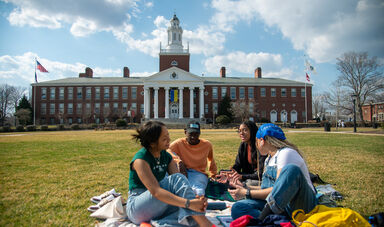
Four students sitting on blankets in front of Boyden Hall on an early spring day

Innovation at Bridgewater State University reflects the integration of sustainability into academic inquiry, operational practice, planning, and institutional leadership. BSU advances innovative approaches that strengthen environmental stewardship, support resilience, and enhance learning by connecting research, technology, policy, and practice. These efforts emphasize scalable solutions, cross‑disciplinary collaboration, and leadership development that extend sustainability beyond individual projects and into long‑term institutional impact.

How You Can Be Part of BSU’s Sustainability Story

How can you get involved in BSU’s sustainability work?

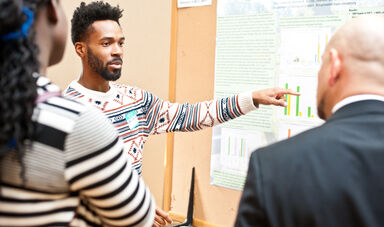
A student presenting research on sustainability points at a graph

Faculty & Staff

  • Join the Sustainability Innovations Strategy Committee: Contact chair, Karen Jason, VP for Operations
  • Provide documentation of your sustainability work to the chair of the Sustainability Innovations Strategy Committee, Karen Jason, VP for Operations
  • Participate in university sustainability committees or working groups
  • Integrate sustainability concepts into curriculum, research, or administrative practice

Students

  • Join sustainability‑focused student organizations or campus programs
  • Participate in sustainability research, presentations, events, or applied learning opportunities 
Featured News

Featured News

More Sustainability News »
Sustainability
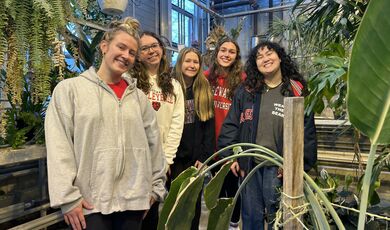
Women stand in a greenhouse next to plants
Natural Affinity

Students celebrate Earth Day and campus sustainability efforts

Sustainability
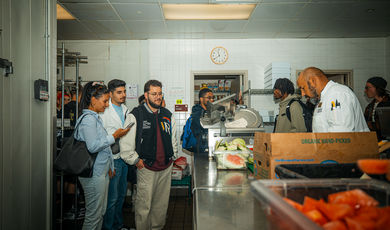
Students watch a man prepare food
Food for Thought
Students collaborate with German counterparts on sustainability