Cafeteria Conundrum
Students transform into forensic lab technicians to crack a mystery case! Someone has sabotaged a batch of cookies by swapping out the flour, and it's up to our young detectives to solve the crime. They will examine the physical and chemical properties of mysterious powders discovered near the cafeteria to find the culprit. Working in small groups, students will dive into investigational science, gaining hands-on experience with cutting-edge Vernier technology and probes (pH and conductivity).
Standards: 5-PS1-3, 5-PS1-4
Colorful Chemistry
Students are introduced to the world of micropipetting, a crucial skill in many scientific fields. They'll master the art of measurement and precision as they perform a series of different reactions, experiencing firsthand the importance of accuracy in the lab. Additionally, we'll explore the fascinating differences between physical and chemical changes through creative problem-solving and scientific inquiry.
Standards: 5-PS1-4
Drop’s Big Adventure
Students will embark on an exciting journey through the water cycle like never before. In this immersive experience, students step into the shoes of a water molecule and discover the thrilling path it takes as it travels through the cycle. Along the way, they’ll collect colorful beads that represent each stage of the journey, building their very own molecule movement bracelet or keychain. Through their movements, they will gain a greater understanding that the water cycle is much more than a predictable two-dimensional circular pattern. Adapted from Project WET’s Incredible Journey.
Standards: 2-ESS2-3, 2-PS1-4
The Great Bird Survival Challenge
A changing island environment has left local bird populations struggling to find food. Students become wildlife scientists as they investigate how different bird beaks help birds survive. Through hands-on challenges, students will test a variety of beak designs to gather food, collect evidence, and discover how adaptations help organisms thrive. When a natural disaster changes the environment and food sources become scarce, students will engineer small changes to their beaks and explore how adaptations can improve a species’ chance of survival.
Adapted from Project WILD’s Bird Beak Buffet
Standards: 3-LS3-1, 3-LS3-2, 3-LS4-2, 3-LS4-3, 3-LS4-4, 4LS1-1
Hunting in the Darkness
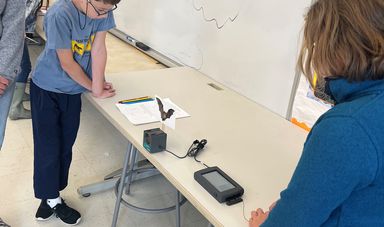
Students delve into the fascinating adaptations that have made bats such successful survivors. Students will explore how bats use echolocation to navigate and hunt. They’ll use Vernier motion detectors to simulate escaping from a bat, experiencing sound waves and echolocation firsthand. This interactive activity also teaches line graphing, making science both engaging and educational.
Standards: 4-LS1-1, 4-PS3-2, 4-PS4-1, 4-PS4-3